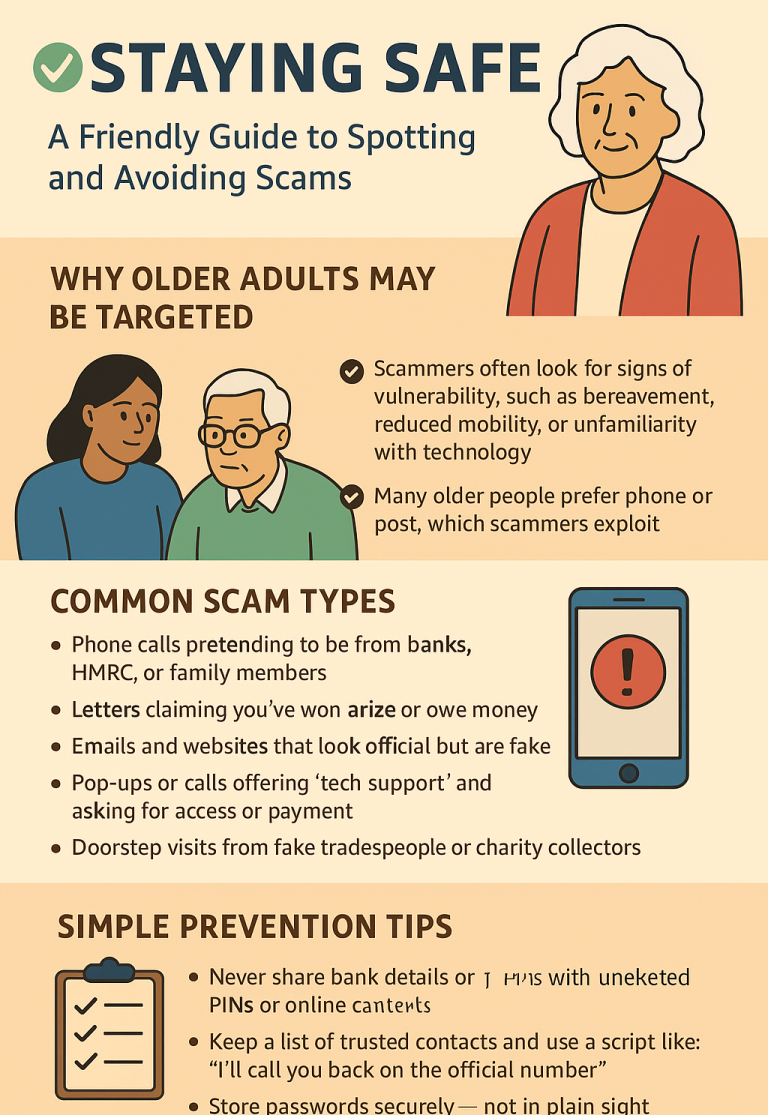
Staying Safe
Senior Safety Guide – Practical Tips for Peace of Mind
Scams can be upsetting and costly — especially for older adults who may be more trusting or unfamiliar with digital tools. This guide offers gentle, practical advice to help families and carers spot warning signs, prevent harm, and take action if something goes wrong.
Why Older Adults May Be Targeted
Scammers often look for signs of vulnerability, such as bereavement, reduced mobility, or unfamiliarity with technology.
Many older people prefer phone or post, which scammers exploit.
Embarrassment or fear of losing independence may stop someone from reporting a scam.
Common Scam Types
Phone calls pretending to be from banks, HMRC, or family members.
Letters claiming you’ve won a prize or owe money.
Emails and websites that look official but are fake.
Pop-ups or calls offering “tech support” and asking for access or payment.
Doorstep visits from fake tradespeople or charity collectors.
Red Flags to Watch For
Urgent requests: “Act now!” or “Offer ends today.”
Pressure to keep things secret or skip normal checks.
Requests for unusual payments: gift cards, vouchers, or bank transfers.
Contact out of the blue about something you didn’t ask for.
Promises that sound too good to be true.
Simple Prevention Tips
Paper & Phone:
Never share bank details or PINs with unexpected callers.
Keep a list of trusted contacts and use a script like: “I’ll call you back on the official number.”
Store passwords securely — not in plain sight.
Digital Safety:
Keep devices updated and use strong, unique passwords.
Treat unexpected emails or links with caution.
Enable two-step verification where possible.
Financial Safeguards:
Use a low-balance account for everyday spending.
Consider bank monitoring or transaction blocks for high-risk individuals.
Social Support:
Regular contact helps reduce isolation and risk.
Encourage open conversations — mistakes happen, and quick action helps.
If You Suspect a Scam
Stop contact immediately and avoid further payments.
Call your bank to block transactions and ask about fraud protection.
Report to Action Fraud and the relevant provider.
If someone is in danger, call 999.
Recovery & Long-Term Support
Keep records: dates, names, emails, and phone numbers.
Review finances with a trusted adviser or solicitor.
Build digital confidence with gentle coaching and practice.
Fridge Card Checklist
Save key numbers: bank fraud line, family contact, Action Fraud.
Print and keep reminders:
Don’t share codes
Verify callers
Never pay by gift card
Keep receipts
Contact your bank if money is sent by mistake
Closing Thought: Scammers change tactics often — but small routines and clear boundaries make a big difference. If something feels off, pause, check, and talk to someone you trust. Early action can stop loss and protect others.
Senior Safety Guide 58a Clarence Road, Newport, PO30 1ER www.seniorsafetyguide.co.uk You’re receiving this email because you signed up for updates. Unsubscribe