Home Safety Tips
From our own experience we have gathered together some practical,
easy-to-apply home safety tips for older adults and their carers,
organised by room and priority. Use these ideas to reduce falls,
prevent accidents, simplify daily routines, and make emergency
help quick to reach.
If anyone has any personal tips we would be happy to publish them on here and of course credit the author with either their name or initials and general area of where they live,
just drop us a note.
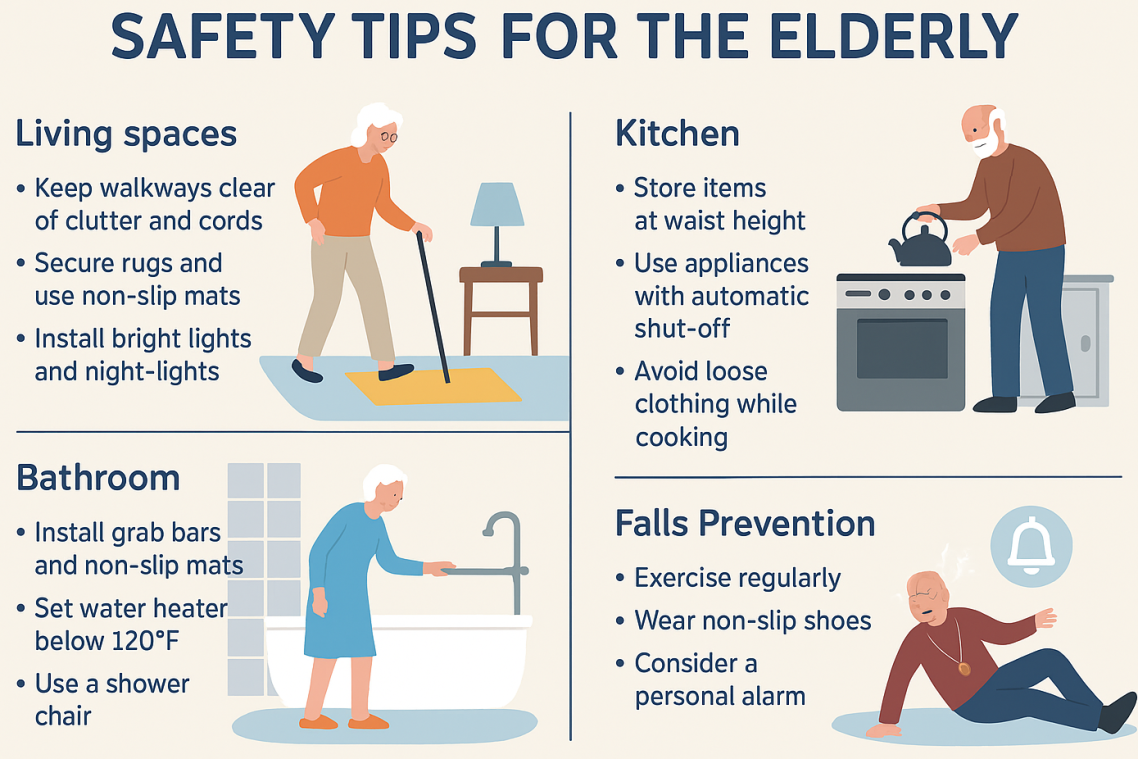
Living spaces
Keep everyday routes clear, well lit, and easy to move through to reduce trip risk and support independence.
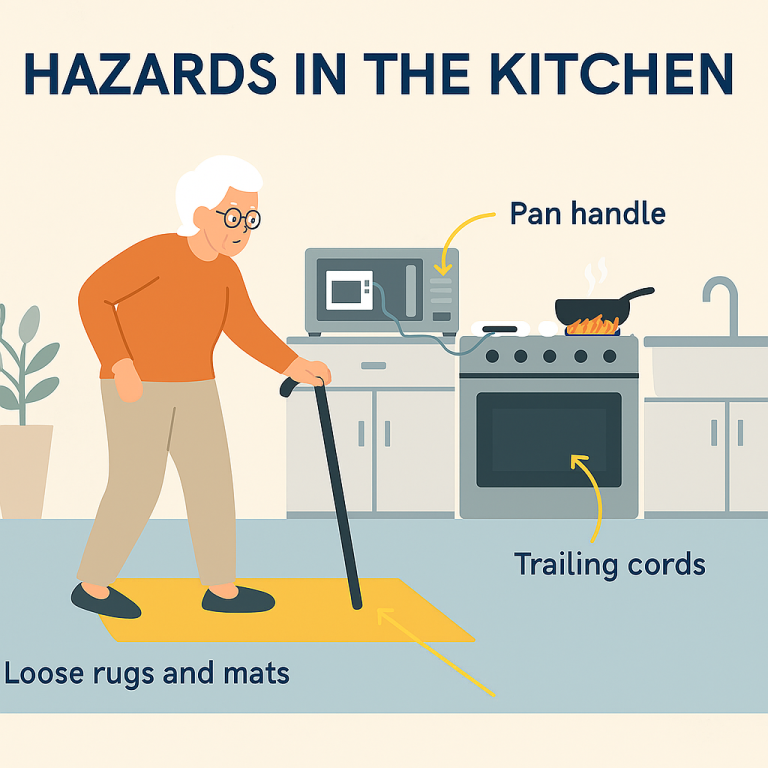
Keep walkways free of clutter and trailing cables; tuck cords against skirting boards.
Replace loose rugs or secure them with non-slip tape; prefer low-pile carpets.
Fit bright, even lighting and night-lights for routes to the bathroom; use motion-sensor lights for stairs and landings.
Arrange furniture to allow clear, wide paths suitable for walkers or wheelchairs.
Kitchen
Reduce fire, burn, spill, and lifting risks while keeping frequently used items within easy reach.
Store daily items at waist height to avoid stretching or step-ladder use.
Use kettles and appliances with automatic shut-off; consider single-cup kettles or kettle tippers.
Turn pan handles inward and never leave cooking unattended; keep a fire blanket and reachable extinguisher.
Replace frayed appliance cords; avoid multiple adaptors and unplug appliances when not in use.
Bathroom
Wet surfaces and transfers create a high risk of slips and scalds; small adaptations make a big difference.
Install grab rails beside the toilet and in the shower or bath.
Use a fixed shower seat or bench and a hand-held shower head for easier washing.
Fit non-slip flooring or mats and anti-slip strips on shower/bath steps.
Set the water heater thermostat to a safe temperature and test water before stepping in.
Stairs and entrances
Handholds, good visibility, and reliable outdoor surfaces reduce falls coming and going.
Fit sturdy handrails on both sides of staircases where possible.
Mark step edges with contrasting tape if vision is reduced.
Keep entry paths, driveways and steps clear of leaves, algae and ice; grit in winter.
Use a well-lit entryway with a peephole and secure locks; maintain a clear route from door to main living area.
Falls prevention and mobility
Strength, routine, and the right equipment reduce falls and speed recovery.
Encourage regular strength and balance exercises from a physiotherapist or local class.
Use fitted walking aids every time they are needed and check them regularly for wear.
Wear stable, well-fitting shoes with non-slip soles; avoid loose slippers outside bed.
Consider a wearable personal alarm, pendant, or monitored fall detector; test and charge weekly.
Alarms, emergencies and technology
imple tech and clear plans make it faster to get help and give family peace of mind.
Install smoke alarms on every floor and carbon monoxide detectors near fuel-burning appliances; test monthly.
Program emergency contacts into phones and set up speed-dial; keep an up-to-date medical summary
by the phone in large print.
Keep a charged mobile phone within reach of common seating and sleeping areas.
Teach neighbours or family how to respond to an alarm and store spare keys in a safe, agreed place.
Medication, vision and hearing
Organisation and regular checks prevent medication errors and help manage sensory decline.
Keep an up-to-date medication list showing dosages and times; use a weekly pill organiser or automatic dispenser.
Review medications regularly with a pharmacist to check for interactions or side effects.
Arrange regular eye and hearing tests; adapt lighting, magnifiers, or hearing devices as needed.
Use large-print calendars and labelled storage to support routines and memory.
Personal safety and scams
Maintain independence while reducing the chance of fraud, doorstep problems, and unsafe visitors.
Use door chains, peepholes and ask for identification from callers; confirm unexpected workers by
phoning the company.
Never give bank details or access codes to cold callers; verify unusual requests with a trusted family member.
Join local neighbour-check schemes or community welfare services for regular check-ins.
Keep lists of trusted contact numbers and local support services where they are easy to find.
Legal and practical planning
Practical paperwork and trusted contacts keep decisions clear if health changes.
Prepare or review a will and consider Lasting Power of Attorney for finances and health decisions.
Store important documents securely and tell one trusted person where they are.
Use reputable, referenced tradespeople for home adaptations; ask for written quotes and references.
Keep copies of key documents (ID, insurance, medication list) accessible to a named emergency contact.
Printable Quick Checklist
Clear trip hazards from floors and routes.
Secure or remove loose rugs; use non-slip tape.
Bright night-lights and stair lighting installed.
Handrails on stairs and grab rails in bathroom.
Shower seat or bench and non-slip bath mats.
Frequently used kitchen items stored at waist height.
Appliances checked; cords replaced if damaged.
Smoke alarms and carbon monoxide alarms installed and tested.
Medication list updated; pill organiser in use.
Wearable alarm tested and charged weekly.
Emergency contacts programmed in phone; medical summary by phone.
Regular eye and hearing checks scheduled.
Trusted neighbour or family aware of spare key and welfare plan.
Important documents located and a named contact knows where.