
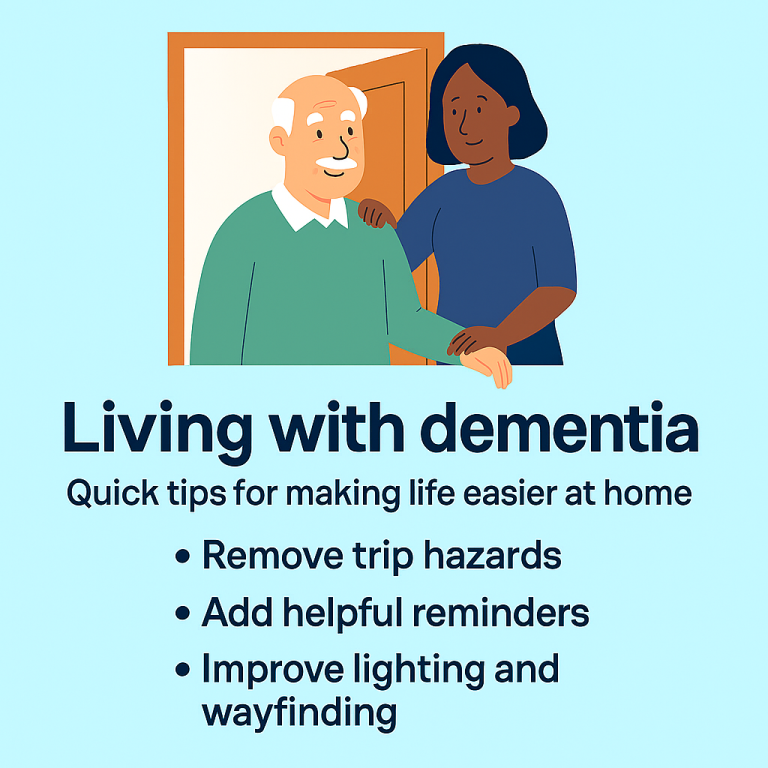
Living with dementia
If someone you care for is living with dementia, small, practical changes at home can make daily life safer and more comfortable while protecting independence and dignity. The points below give practical advice on easy steps you can try straight away.
Quick overview (what matters most)
Simplify the environment: reduce clutter, remove trip hazards (loose rugs, trailing cables) and keep clear, consistent walkways.
Improve wayfinding: use labels, photos and plain furnishings; keep similar flooring between rooms to avoid false steps.
Make routines easier: pre‑set phones with key numbers, leave step‑by‑step prompts by appliances, and use calendars or whiteboards for important dates.
Prioritise lighting and contrast: brighten rooms, add night lights and avoid shiny floors or busy patterns that can be misread as hazards.
Kitchen and cooking safety: label cupboards, keep everyday items on worktops, use contrasting plates, and consider automatic cooker shut‑offs or sensors if forgetting is a risk.
Bathroom safety: use contrasting toilet seats, temperature‑sensitive plugs, grab rails, non‑slip mats and consider walk‑in showers if needed.
Getting out safely: add handrails, mark step edges, consider a key safe, tell trusted neighbours, and explore easier phones or tracking devices if there’s a risk of getting lost. These practical themes and tips are adapted from Age UK’s At home with dementia guidance.
Practical step‑by‑step checklist
Walk each room looking for trip hazards; remove or secure them.
Add labels or photos to cupboards, drawers and doors for quick recognition.
Improve lighting: brighter bulbs, even light distribution, and motion or night lights.
Make the bedroom and bathroom easier to use: contrasting bedding, clear paths, and bathroom adaptations.
Set up simple reminders and pre‑programme phones with key contacts.
Discuss contingency plans: neighbours, key safes and who to call in an emergency.
Ask your GP, local council or an occupational therapist about assessments and local equipment or grant help.
Tips for family and friends
Involve the person with dementia in changes where possible; small choices keep dignity and confidence.
Make one or two changes at a time — too many can be confusing.
Keep familiar items in the same place and avoid unnecessary replacement of things the person knows.
Seek local advice for assessments, adaptations or respite support; an occupational therapist can recommend useful aids.