Outdoor Safety
This expanded guide builds on the core tips and adds practical, detailed actions for planning, equipment, environment, travel, activities and community support so older adults can stay active and safe outdoors.
Planning, identification and preparation
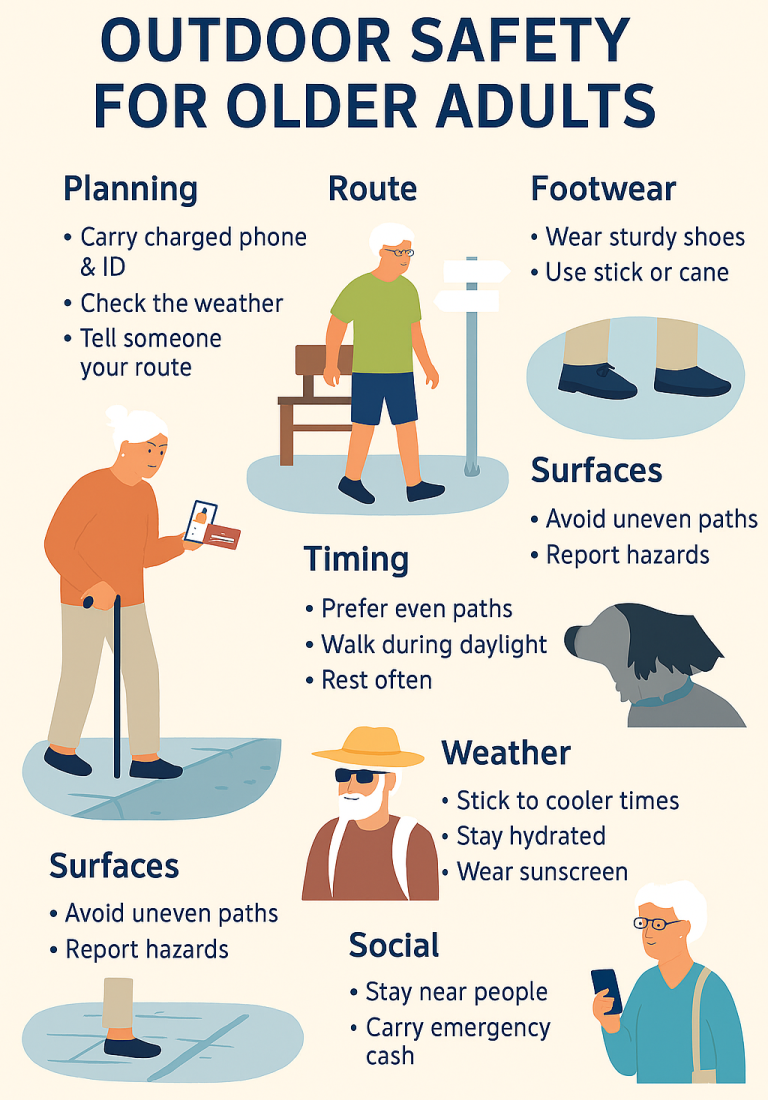
Carry ID with emergency contact details and a brief medical summary; keep it in a pocket or wallet that’s always with you.
Share your route and expected return time with a friend, family member or neighbour.
Carry a charged mobile phone and a small power bank for longer outings; add essential
emergency numbers to speed-dial.
Check the weather forecast and postpone trips in extreme heat, heavy rain, or high winds; plan for shade or shelter on longer walks
Route choice, timing and visibility
Choose level, well-maintained pavements, pedestrian paths or parks rather than uneven kerbs and rough ground.
Prefer routes with benches or places to rest at regular intervals and with visible signage or landmarks.
Walk in daylight where possible; if you must go out after dark, pick well-lit routes and wear
reflective clothing or carry a torch.
When crossing roads, use designated crossings, make eye contact with drivers, and avoid rushing.
Footwear, mobility aids and posture
Wear sturdy, well-fitting shoes with a firm sole and good tread; avoid soft, floppy slippers or new shoes that haven’t been broken in.
Lace or fasten shoes securely so laces do not catch; choose low, stable heels and wide toe boxes for balance.
Use appropriate mobility aids for the terrain (cane, stick, rollator) and check tips, brakes, wheels and tyre pressure before leaving home.
Keep posture upright, take shorter steps on uneven surfaces, and use handrails on ramps and steps.
Surface hazards and how to manage them
Scan for uneven paving, raised tree roots, loose slabs, tramlines and dropped kerbs; slow down and step around hazards rather than over them.
Avoid wet leaves, algae, mud, frost and ice; use grit in winter and choose alternative routes after rain or frost.
Report broken pavements, poor lighting or overgrown paths to your local council so repairs can be prioritised.
Use caution on inclines and declines; if steep, consider a different route or use public transport/assistance.
Weather, hydration and sun protection
Carry water and sip frequently, especially in warm weather; some medications increase heat sensitivity and dehydration risk.
Avoid the hottest part of the day in summer; schedule walks for morning or late afternoon and wear layers you can remove.
Use SPF 30+ sunscreen, wide-brimmed hats and sunglasses on sunny days; reapply sunscreen as needed.
In cold weather wear insulated layers and shoes with better grip to reduce slip and cold-related risks.
Transport, public travel and vehicle safety
When using buses or trains, allow extra time for boarding, sit near doors, and use priority
seating when required.
Confirm taxi or ride-hailing driver and vehicle details before getting in and ask for help with bags or steps.
If driving, consider limiting driving to familiar routes, daylight hours and good weather; ensure the car’s mirrors, lights and tyres are well maintained.
Consider community transport, escorted services or volunteer driver schemes if mobility or confidence has decreased.
Garden, home exterior and tools
Keep garden paths, steps and driveways clear of leaves, moss, hoses and tools; apply salt or
grit in icy conditions.
Fit secure handrails to porches and steps; install motion-activated lighting near entrances and along paths.
Store garden tools safely; use seated or two-handed tools to reduce strain and avoid heavy
lifting alone.
Use long-handled tools to avoid overstretching and take frequent breaks during gardening tasks.
Activities, exercise and group options
Choose outdoor activities suited to ability and fitness: short, regular walks, gentle gardening,
tai chi or seated exercise groups.
Join local walking groups or escorted outings for company, safety and motivation; let
organisers know mobility limits in advance.
If cycling, use an appropriately sized bike, maintain brakes and tyres, wear a helmet and choose low-traffic routes or cycle paths.
Gradually build distance and intensity; stop and rest if dizzy, breathless or unsteady.
Social safety, crowds and personal security
In busy places stay near staff, other people, or family; avoid isolated areas.
Carry a small amount of emergency cash and a contact card; don’t display large amounts of money or valuables.
Use common-sense visitor protocols: check IDs, arrange appointments for tradespeople and never let strangers into the home without verification.
For those with cognitive decline, go out with a companion or use supervised group activities and carry clear ID about any condition and emergency contact details.
Technology, alarms and location tools
Consider a wearable alarm or personal fall detector that works outdoors and links to a
monitoring service; test devices regularly.
Use location-sharing features with a trusted contact for longer outings; set up phone speed-dial numbers and emergency widgets for quick access.
Label phones with clear, simple instructions for helpers; keep devices charged and in an easy-to-reach pocket.
Vision, hearing and cognition considerations
For reduced vision: use high-contrast clothing, reflective strips and routes with good lighting and clear signage.
For hearing loss: avoid using earphones at high volume; pause and look before crossing streets and rely more on visual cues.
For cognitive impairment: prefer familiar, short routes, predictable routines and companion support; use simple maps and marked meeting points.
Pets, assistance animals and stranger encounters
Keep pets on short leads in busy areas to prevent sudden pulling or entanglement; ensure dogs are trained to walk steadily.
If approached by strangers, keep personal items close and seek help from nearby staff or other people; use assertive, calm responses and move to a public space if unsure.
Maintenance, checks and when to seek help
Inspect mobility aids, footwear, outdoor lighting and garden paths routinely; repair or replace faulty equipment promptly.
If you experience dizziness, new breathlessness, unexplained weakness, or recent falls, seek medical advice before resuming outdoor activities.
Consider an occupational therapy or physiotherapy assessment for personalised advice on safe routes, aids and exercises to reduce outdoor fall risk.